

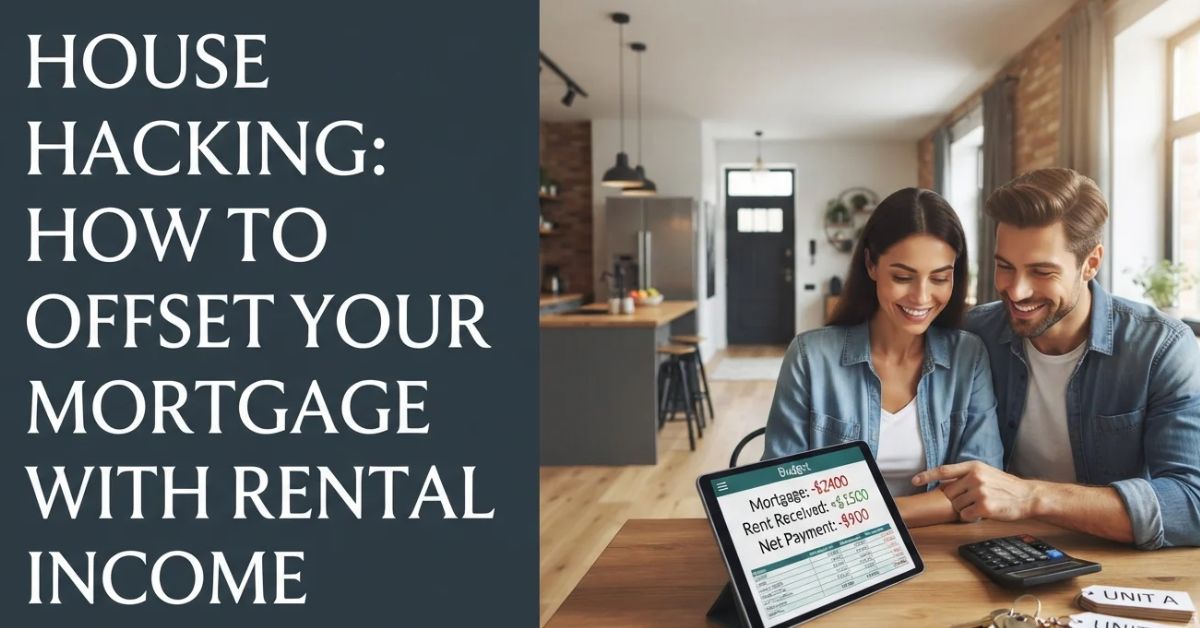
Buying a home comes with a big monthly expense, but you may not have to cover all of it on your own. If the property has a spare bedroom, an extra unit, or an ADU, renting that space could bring in some extra income each month.
This approach is known as house hacking. The rent can go toward your mortgage and other home expenses, helping lower the amount you pay yourself. For buyers exploring properties through QuixSale, it is one way to look at a home for both its living space and its rental potential.
House Hacking Changes the Cost of Owning a Home

So, what is house hacking in practical terms? You buy or own a home, live there as your primary residence, and rent part of the property to someone else. This could mean having a roommate or living in one unit of a small multifamily property while tenants occupy the others.
The rent you receive can help with your mortgage, property taxes, insurance, utilities, and other costs. A house hacking strategy does not have to eliminate your housing payment completely to be useful. Reducing a $2,500 monthly housing cost to $1,500, for example, still leaves an extra $1,000 in your budget.
Choose a Rental Setup You Can Actually Live With
There is more than one way to make house hacking work. The right setup depends on the type of home you buy, local rental demand, your budget, and how comfortable you are living close to tenants.
-
Live in One Unit of a Small Multifamily Property
A duplex, triplex, or four-unit property gives you your own living space while allowing you to rent the remaining units. Duplex investing is often considered by buyers who want rental income without sharing their kitchen, bathroom, and other everyday spaces with a tenant.
-
Rent a Spare Bedroom
A single-family home can also work. If you have one or two bedrooms you rarely use, renting them may help cover part of your monthly costs. Before doing this, think about shared bathrooms, parking, storage, guests, and how common areas will be used.
-
Use a Separate ADU
Some properties have an accessory dwelling unit, such as a backyard cottage or garage apartment. An ADU can give both the owner and tenant more privacy. Before counting on its rent, check that the space can legally be rented under local zoning and occupancy rules.
Run the Numbers Before Making an Offer
A property can look perfect during a showing and still make little sense financially. Before browsing investment properties for sale, estimate how much rent the available space could realistically bring in and compare it with the property’s full monthly cost.
Do not stop at the mortgage payment. Your calculation should also consider:
- Principal and interest on the mortgage
- Property taxes and homeowners insurance
- HOA or mortgage insurance costs when applicable
- Utilities you will continue paying
- Routine maintenance and future repairs
- Money set aside for vacancies
Use realistic local rent figures rather than the highest listing you can find. If the numbers only work when every room stays occupied all year and nothing needs repairing, there is very little room for an unexpected expense.
See How Rental Income Changes Your Monthly Cost
Suppose your mortgage and other regular housing expenses come to $2,800 per month. You live in one side of a duplex and collect $1,400 in rent from the other unit. You also put aside $250 each month for repairs, vacancies, and rental-related expenses.
That leaves about $1,150 in rental income contributing toward your housing cost. Your own share is now roughly $1,650 instead of $2,800. This is where house hacking can be useful even when the tenant’s rent does not pay the entire mortgage.
The calculation will look different for every property. Rent levels, loan terms, taxes, insurance, repairs, and utility arrangements can all change the result, so work with the actual numbers for the home you are considering.
Rental Income and Mortgage Qualification Are Not the Same Thing
There is an important difference between rent you expect to receive and rent a lender may allow you to use when qualifying for a mortgage. Buying a property with a rentable unit does not automatically mean all expected rent will be added to your qualifying income.
Loan programs have their own rules for eligible properties and documentation. For example, current Fannie Mae guidance allows rental income to be considered in certain cases involving two-to-four-unit principal residences and one-unit primary residences with an eligible ADU. Appraisal, lease, borrower, and other requirements can apply.
If rental income is important to your ability to qualify, discuss the specific property and loan program with your lender before making assumptions. Rules can also change, so current guidance matters more than a percentage or lending tip you may have seen elsewhere.
Look at the Home From a Tenant’s Point of View
A good purchase price alone will not make a rental space appealing. Walk through the property and imagine living in the part you plan to rent. Would a tenant have reasonable privacy? Is there enough parking? Can they easily use the laundry area?
This is especially important with duplex investing or homes that have been divided into separate spaces. Look at local rents, nearby employment, transportation, storage, utility arrangements, and the condition of the unit. Rental demand matters just as much as the layout.
You can learn plenty about property analysis through local professionals, investor groups, and real estate seminars, but always bring the discussion back to the actual neighborhood and property. A method that works in one market may not produce the same numbers somewhere else.
Check the Rental Rules Before You Bring in a Tenant
Before putting up a listing, find out what you are legally allowed to rent. Zoning rules, occupancy limits, landlord-tenant laws, HOA restrictions, permits, and insurance requirements may affect how you can use the property.
This step becomes especially important if a basement, garage, or other area was converted into living space. Do not assume that an existing bedroom or apartment is automatically approved as a rental simply because a previous owner used it that way.
Remember That You Are Living Near Your Tenant
The numbers may work on paper, but house hacking also changes your daily life. A tenant may live across the wall, downstairs, or even in the bedroom next to yours. That is quite different from owning a rental property across town.
Think about how much privacy you are used to having at home. Sharing a driveway, laundry area, backyard, or kitchen can feel manageable at first, but small issues may become frustrating over time. The setup needs to work for your normal routine, not just for your monthly budget.
Set expectations early about parking, noise, guests, pets, shared areas, utilities, and maintenance requests. A written lease can make responsibilities clearer, but you should also decide whether you are comfortable having a landlord-tenant relationship so close to home.
Prepare for the Month When the Rent Does Not Arrive

A strong house hacking strategy should still leave room for things to go wrong. A tenant may move out, a repair may take longer than expected, or it may take several weeks to find the next renter.
The mortgage does not disappear during that gap. Keep money available for vacancies and repairs instead of treating every dollar of rent as spendable income. This gives you more breathing room when the property has an unexpected expense.
Conclusion
A good house hack should still be manageable when a tenant moves out. Rent can help with the mortgage each month, but an empty room or unit means that money may stop coming in for a while. A repair could also show up when you least expect it.
Before buying, work out what the home would cost you during those slower months. Use a realistic rent estimate and keep some money available for repairs or a gap between tenants. This gives you a better idea of whether the property truly fits your budget.
House hacking can lower what you spend on housing each month, but it should not depend on everything going perfectly. If you can comfortably own the property even when rental income changes, you are in a much better position for the years ahead.
FAQs
How much rental income should I expect from a house hack?
There is no set amount because rent varies by property and location. Check what similar rooms or units are renting for nearby rather than choosing a number that makes your budget look better.
What should I check before renting part of my home?
Check local rental laws, zoning rules, HOA restrictions, occupancy limits, and insurance requirements before renting out the space.
What happens if my rental space stays empty?
You will still need to cover your mortgage and other property expenses. Keeping some savings aside can help during periods without a tenant.
Is house hacking a good option for a first-time buyer?
It can help reduce monthly housing costs, but it also comes with landlord responsibilities. Consider your budget, rental demand, and comfort with having tenants.

One Response