

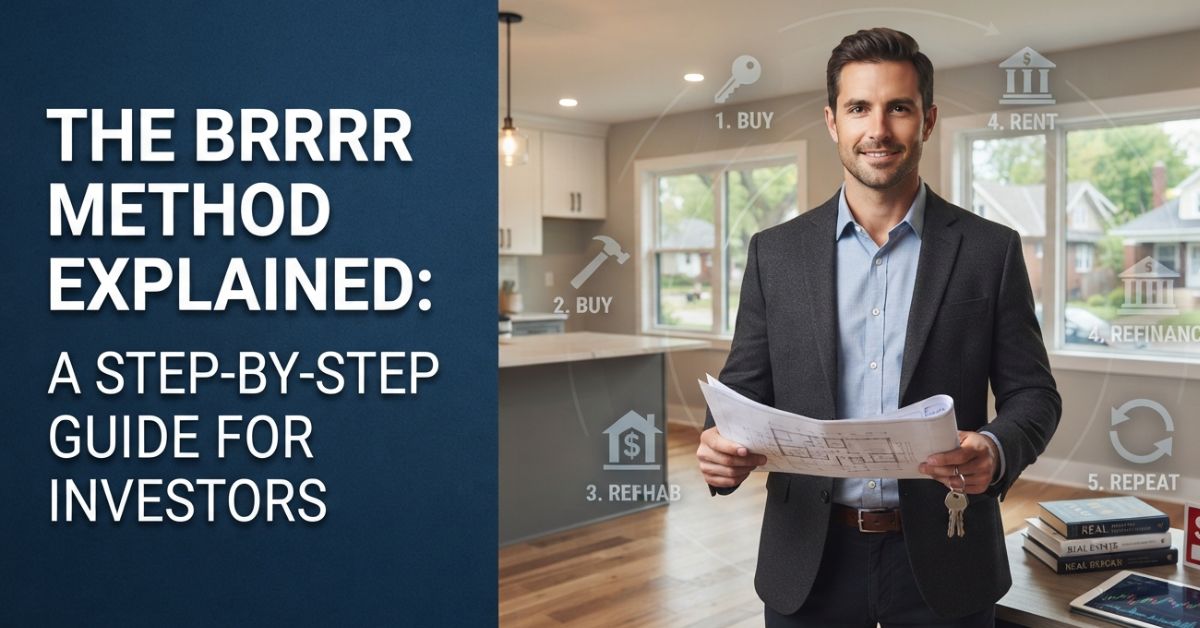
The majority of investors buy one rental property and call it a portfolio after a decade. Those using the BRRRR method do not hesitate to invest their capital; they keep redeploying it for one deal after another to accumulate more rental properties without losing money.
If you’ve heard the term thrown around at meetups but never seen it broken down step by step, that’s exactly what this guide is for.
What Is the BRRRR Method in Real Estate?
BRRRR stands for Buy, Rehab, Rent, Refinance, Repeat. It’s a strategy where you purchase a distressed or undervalued property, fix it up, place a tenant, then refinance based on the new, higher value, pulling your original cash back out so you can go do it again.
Instead of saving up a fresh down payment for every single deal, you’re reusing the same money on a loop. That’s the entire appeal.
Why the BRRRR Method Beats Traditional Buy and Hold Real Estate
Standard buy and hold real estate investing works like this: save money, put 20-25% down, buy a rental, collect rent, repeat whenever you’ve saved up again. It works, but it’s slow. Your capital gets locked into each property for years.
BRRRR flips that model on its head. Because you’re refinancing out most (sometimes all) of your invested cash, your money doesn’t sit still. It moves from deal to deal.
A few reasons investors switch over:
- Faster portfolio growth: one pot of capital can fund multiple properties over time
- Forced appreciation: the rehab phase actively increases the property’s value instead of waiting on the market
- Built-in cash flow: you’re still holding a rental at the end, so this isn’t a flip; it’s buy-and-hold real estate with a turbocharger attached
The Five Steps of the BRRRR Method
1. Buy
This is the first step; it is where your deal will be either closed or it will not happen at all. You need to find the property below its market value in the right neighborhood where rentals do well. Your best chances of successfully closing your deal are to search for off-market properties and distressed sellers.
A lot of investors source these leads through a real estate investment marketplace, where sellers, wholesalers, and off-market listings are already grouped together for people specifically looking to invest, not just browse.
2. Rehab
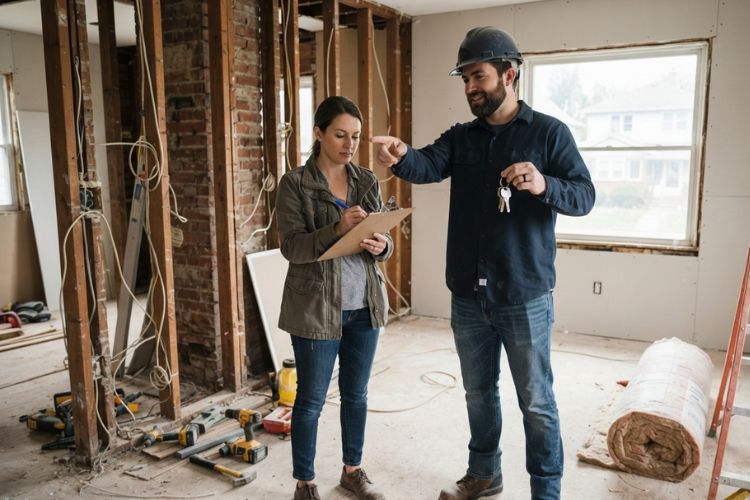
When planning a renovation, it is important to budget beforehand. Focus on the key areas: bathrooms, HVAC systems, kitchens, roofs, and curb appeal. Do not waste money on cosmetic renovations that do not add any value.
Always have extra cash on hand for unplanned expenses. There are many surprises that show up during a renovation that were not mentioned earlier: old wires, leaks, and cracks.
3. Rent
If you plan on refinancing your real estate investment, make sure to find a tenant before approaching the bank. Most banks require you to see that the property is cash-flow positive before lending. Be careful; a bad tenant can ruin all your efforts.
4. Refinance
This step is the whole engine of the strategy. You take out a new loan based on the property’s current appraised value (after rehab), pay off whatever short-term or hard money loan you used to buy and renovate, and pocket the difference.
If you priced and rehabbed the deal correctly, that difference can be close to, or even more than, what you originally put in.
5. Repeat
Take the capital you just pulled out and go find the next property. This is where the BRRRR method compounds. Do it right a few times and you’re not managing one rental; you’re running a small portfolio, funded almost entirely by the same starting capital.
How to Calculate ARV (And Why It Makes or Breaks the Deal)
ARV means After Repair Value, which is what the property will be worth once renovations are complete. Get this number wrong, and everything downstream falls apart: your refinance amount, your cash-out, your entire return.
Here’s a straightforward approach to calculating ARV:
- Pull 3-5 recent comparable sales (“comps”) within a half-mile, sold in the last 3-6 months
- Match comps by square footage, bed/bath count, and condition after your planned repairs
- Adjust for differences, add value for extra bedrooms or upgraded finishes, subtract for smaller lots or dated features
- Average the adjusted comps to land on a realistic ARV
A common rule of thumb some investors use for quick math:
ARV = Purchase Price + Renovation Costs + Appreciation Buffer
But comps will always beat formulas. If your ARV estimate isn’t backed by real recent sales, your whole refinance plan is a guess.
Common Mistakes That Sink a BRRRR Deal
- Overestimating ARV. Wishful thinking here means you can’t pull enough cash out at refinance.
- Underestimating rehab costs. Surprises during renovation eat into your margin fast.
- Skipping the refinance seasoning period. Many lenders require you to own the property for 6-12 months before a cash-out refinance; plan your cash flow around that wait.
- Not vetting your contractor. A slow or unreliable contractor delays your entire timeline, and time is money in this strategy.
- Ignoring the rental market. A great rehab in a weak rental area still won’t cash flow.
If you’re new to this, it’s worth sitting in on a few real estate seminars before running your first deal solo. Hearing how experienced investors evaluate ARV, negotiate contractor bids, and time their refinances can save you from mistakes that are expensive to learn the hard way.
Is the BRRRR Method Right for You?
This strategy rewards patience, math, and a stomach for renovation headaches. It’s not passive, at least not at first. You’ll need to:
- Be comfortable managing contractors and timelines
- Have access to short-term financing (hard money, private lenders, or cash)
- Understand your local rental market cold
- Be disciplined about ARV and rehab budgets, not optimistic
If that sounds like your lane, BRRRR can build a portfolio far faster than saving for one down payment at a time.
Frequently Asked Questions
Is the BRRRR method risky?
It carries more risk than a simple buy-and-hold purchase because you’re relying on a rehab going to plan and an ARV estimate holding up. Solid comps and a realistic budget lower that risk significantly.
Do I need cash to start BRRRR investing?
Not necessarily. Many investors use hard money loans or private lenders for the purchase and rehab, then pay that off with the refinance. You do need enough reserves to cover unexpected costs, though.
How long does one BRRRR cycle usually take?
Anywhere from 6 months to over a year, depending on rehab scope, lender seasoning requirements, and how quickly you find a tenant.
Can I use the BRRRR method with a regular mortgage?
The initial purchase typically uses short-term financing since traditional mortgages don’t usually fund a rehab. The refinance step, however, is often a standard conventional or DSCR loan.
Final Thought
The BRRRR method is not to be viewed as a quick path to profits; rather, it is a complete system to be implemented. Purchase wisely, repair effectively, rent out properly, and refinance based on the performance of the deal. As you master this system for your first deal, you can use it repeatedly for all of your future deals.